The Well-Tempered Computer, an introduction to computer audio

Showing posts with label NOS. Show all posts

Friday, September 21, 2012

Metrum Acoustics Hex

Non oversampling dac.
Dual mono, 8 Dacs pro channel in differential mode.


Inputs:
2x optical Toslink, Coaxial 1x BNC and 1x RCA.
Optical 44 - 96 kHz sampling rate .
Coaxial , USB and AES/EBU: 44 - 192 kHz sampling rate.
AES/EBU module optional (€ 168.00)
USB module optional ( € 168.00).
The USB input is not UAC2 (USB Audio Class 2) compliant but uses the M2Tech proprietary drivers for Win and Mac.
Output voltage:
RCA : 2 Volt RMS full scale.
XLR: 4 Volt RMS full scale

Frequency response:
1Hz - 20 khz - 2.5 dB 44.1 kHz sampling rate.
1Hz - 65 kHz - 3dB 192 kHz sampling rate.

Distortion: 0.03 % THD
Noise :-130 dB related to 2 Volt RMS output
Jitter: < 35 pico Seconds

Website: Metrum Acoustics
Price: Hex € 2185

Friday, April 8, 2011

AMR DP-777 DAC


Abingdon Music Research's new DAC, the AMR DP-777 (Available May 2011 €3,150, approximately $5,000) is quite unique and clearly impressive. In fact, we have not seen a more impressive set of specs elsewhere.  AMR gear is all the rage now in the UK - check out Audio World Show and Audiograb's Axpona 2011 which features AMR digital front end in significant number of rooms.

The DP-777 sports two separate DACs inside, so you can choose to listen to 32-bit high-resolution or classic Philips 16-bit DAC one (selectable via remote control). AMR claims the world's most advanced patent-pending Global Master Timing clock lock technology which intelligently chooses over 28 million different real-time clocks to exactly match the dynamic input clock , the DP-777 decouples the DAC system clock completely from SPDIF/USB inputs to eliminate jitter. The USB input is 192kHz capable and asynchronous.


Several user selectable digital filters (via a DSP chip) including Apodising, Minimum Phase, Linear Phase, Soft-Knee and Brickwall Filters under: 44.1kHz, 48kHz, 88.2kHz, 96kHz, 176.4kHz; 192KHz.

The input stage has 2 x 'HD' Valve Driven Technology (world's first) XLR/BNC SPDIF inputs (24/192kHz) plus 2 x 'HD' RCA/Optical SPDIF inputs (24/192kHz). The output stage is ofcourse tube and its defeatable resister step volume control is in analog domain.  There are also two analog input so it can function as a preamp!


Detail from its press release:

Gemini Digital Engine (GDE) Unlike any other converter, at the core of the Gemini Digital Engine, there is not one, but 2 distinct chipsets that define their generation; one latest generation High-Definition 32-Bit DAC to produce the best sound from HD recordings and one Classic Multibit 16-Bit DAC to produce the best sound from CD. These two ‘non-identical twins’ deliver the best of both worlds in a way that is simply unmatched. Further, the Gemini Digital Engine pushes these chipsets beyond what is thought possible. Using Field Programmable Gate Array (FPGA) and Digital Signal Processing (DSP) to handle the core digital duties, including the memory buffer and managing all the signal processing, we have in effect, created own DAC chipsets that perform and function at the leading-edge.

Zero Jitter Mode The Zero Jitter Mode utilises our completely innovative Global Master Timing (GMT) and Intelligent Memory System (IMS) to totally eliminate jitter originating from the source. AMR’s Global Master Timing clock system intelligently actualises over 28 million different real-time clock frequencies to exactly match the dynamic input clock e.g. 192,000.001Hz or 192,000.002Hz of the source. Coupled to the Intelligent Memory System (IMS), the GMT/IMS system block out source jitter once and for all.

192kHz Asynchronous USB Input The DP-777’s true 192kHz Asynchronous USB Audio Class 2.0 Input effects a genuine asynchronous decoupling of the DAC system clock from the computer.

HD Valve Digital Input (HD-VDI) This is AMR’s unusual brainchild of using an New Old Stock (NOS) valve designed to operate into several 100Mhz to amplify and purify the high-definition SPDIF signal with zero feedback. Clearly visible on an oscilloscope, with HD-VDI, the signal changes from a blurred to clean and sharp square wave. As result, any deficiency in the incoming SPDIF is hereby totally removed.

OptiValve Output Stage Two NOS valves perform the left and right channel analogue amplification and output buffering duties using the same demanding approach as the CD-77/CD-777; where one half amplifies and the other half buffers without any negative loop feedback. No solid-state devices are present in the signal path.

High-End, Direct-Coupled Pre-Amplifier The DP-777 is also a direct-coupled/buffered analogue pre-amplifier capable of accepting two analogue sources in addition to the signal internal to the DP-777. The DP-777 has an exceptionally precise 71-step resistor matrix-based Analogue Volume Control (AVC) system that delivers unmatched transparency. To attain the highest sound quality, no digital volume control is used whatsoever.

Monday, March 21, 2011

AMR CD-77 CD player / DAC

UK-based Abbingdon Music Research's CD-77 is probably the most advance and elaborate CD/DAC that is based on the vintage Philips TDA1541A chip, considered by some - the absolute best DAC chip ever made.  

The unit comes with several different sampling approaches from AMR's proprietary Digital Master non-over-sampling filter to oversampling to upsampling, which are user-selectable.  Digital Master I and Digital Master II were developed by AMR and are exclusive to the CD-77 and its brother CD-777.  


All internal clocks are synchronized to the exceptional military-grade temperature compensated master clock module to avoid the creation of unwanted beat frequencies, reduce overall digital noise and resultant jitter.  The CD-77's OptiReg® digital power supply circuit has 14 specifically designed regulators, most of which are two or three-stage. Its transport mechanism is an in-house design based on the high-precision, reliable Sony K-series laser pickup mated to the musical Phillips CD-18 servo system along with a proprietary high-torque direct-drive motor. This is all housed in a very substantial CNC machined aluminium CD well with an extra-stable CD spindle and a CNC machined aluminium CD clamp. 


CD-77's power supply transformers have been designed in-house and are individually hand-made. They are some of the most advanced double C-Core transformers available. AMR claims that they surpass even the impressive R-Core transformers used in many high-end components and comprehensively outclass traditional EI and toroidal transformers used in many peer group products. 


Other high quality parts including Ultra High Speed RF, military-grade design printed circuit boards, German-made premium film capacitors, AMR's own power supply polypropylene film Music Capacitors, zero noise schottky rectifiers and FEP Teflon insulated cable with silver-plate copper conductors for chassis wiring.


OptiBus® USB digital input accesses the vast library of music from a computer, allowing it to be enjoyed to a far higher level than conventional personal computer audio systems.  OptiValve® analogue stage is a thermionic electron valve circuit. Using no negative feedback, with high gain, very low distortion and low output impedance together with new old stock thermionic electron tubes.

Specifications

Operation modes: 

  • Direct Master I; no digital or analogue filter
  • Direct Master II; no digital filter, anti-sin(x)/(x) analogue filter
  • Oversampling 2X, 4x
  • Upsampling 96KHz, 192KHz ( I am at a loss to understand why, since TDA1541 only does 16-bit/44kHz TDA1541A can accept sampling rates of up to 192kHz - 8x oversampling from 48kHz base data - without problems, albeit at 16bits resolution)
Digital Audio Inputs: 
  • 1 x USB interface, 1 X S/P-DIF Interface (optional)
Analog Outputs: 
  • 1 x RCA; 1 x XLR per channel
Digital Outputs:: 
  • 1 X S/P-DIF Interface (optional)
Thermionic Electron Valves: 
  • ECC81/12AT7 (NOS): amplification stage
  • 5687/6900 (NOS): output buffer stage
  • EZ80/6CA4 (NOS): rectifier stage


How about the price? If you have to ask - you probably can't afford it.

Saturday, January 29, 2011

Software upsamplers

Why? And you thought NO oversampling supposed to be best? OK, yes when you can avoid it.  Today, most d/a chips - including the best ones - are of the sigma-delta types which up/oversampling is embedded into the design, otherwise you would be left with horrendous noise in the output signal.


Upsampling itself can not create information that was not already there, just like blowing up 1m pixels file to poster proportions.  So here the point is not to create faux information, but it is there to move noises out of the audio band.  All of this usually happens in the oversampling digital filter (usually an integral part of the d/a chip, some are custom and external).  The noises, now moved high up out of the audio band, are then filtered out.  The filter can be a brick wall type, at say 22kHz ( good frequency response, but bad phase response), or a slow roll off minimum phase type.  In multi-bit DAC, this filter is normally analog, but for a sigma-delta dac, it is done in the digital domain.


Hardware oversampling in digital filters are not the best, even in the best DACs, because of all the computations that has to be done in real time.  The more sophisticated DACs uses custom, outboard digital filter to do the job, but since we're sending music to DACs from our computers - there's also the software upsampler route.  Sending the DAC an already up-sampled high resolution file gives the hardware digital filter an easier job, sometimes bypass its upsampling work almost completely.


Industry standard software upsamplers or sample rate converters (SRCs) are Weiss Saracon and Izotope RX.  They are used in mastering studios and expensive.  For PC users, there are quite a number of other alternatives, including on-the-fly upsamplers such as the XXhighend player (design to work in conjuction with the Phasure NOS no filter DAC) and Sygnalist's HQplayer.  For a Mac user like me, there is the Wave Editor from Audiofile Engineering for $79.


Wave Editor uses Izotope's upsampling algorithm with options to adjust, among other things, bit depth, sampling rate, filter slope, pre-ringing.   There is also the Sample Manager, a batch processor from the same company but with less options.  However, the only thing Wave Editor does not do is real time on-the-fly upsampling.  Wave editor takes about a minute to convert a file.  If you want to do on-the-fly upsampling, Apple CoreAudio is good, but not good enough.  Check out src.infinitewave.ca which shows charts of various SRCs.

iZotope SRC sweep
iZotope SRC minimum pre-ring
Pure Music and Amarra supposedly has better built-in SRCs and are worth the price they are charging for their hard work.  There are also the new Audirvana (still in alpha stage, open source, and free) utilizes Secret Rabbit Code libSampleRate algorithm which also open source, free, and sounds great.

Audirvana
As I am writing this blog, I am running Audirvana, which upsamples to 32-bit/ 192kHz, via 32-bit asynchronous USB transfer to Calyx Audio DAC (16 x ESS 9018 32-bit DAC chip, the only chip that can accept true 32 bit data path).  The sound? It's a glimpse of audio nirvana!


Calyx DAC

Monday, January 24, 2011

Oversampling vs Upsampling

A recent thread on ComputerAudiophile.com has sparked a heated debate on Upsampling/Oversampling, whether it is a marketing hype or algorithm with true sonic benefits. 


I've came across this article by Pacific Valve & Electric Company's Vic Trola, a good read. 
Note: Pacific Valve imports and distributes Lite Audio, Audio GD, among others.
"Monday, June 12, 2006
What’s with Oversampling, Upsampling and Non-Oversampling (NOS) 
When we were vinyl, we had our own vocabulary: belt drive, direct drive, servo, anti-skate, counter weight, tracking angle – remember? Now that we are optical, a whole set of new words spook our vocabulary: Upsampling, Oversampling and Non Oversampling. Needless to say, these words are creating confusion out there in the press and among some audio jockeys (not you, of course) and they are used interchangeably, which is a big no-no.
Let’s first start out with some basics: oversampling is the realm of the conversion between digital to analogue and the upsampling is the realm of digital. Non oversampling is an enigma wrapped in a mystery. You cannot use these words interchangeably because they all mean different things.
You want a DAC to correct the anomalies in the conversion process. Take some of the earliest DACS, that were 16 bit and extracted data at a rate of 44.1 kHz / 16 bits. When the DAC converts data in the 20-20kHz range, it leaves some canard above the 22kHz range that must be cleaned up. If it did not, inter modulation distortion and ultrasonic frequencies would wreak havoc on your system – destroying tweeters, midrange drivers and turning mylar into chewing gum. In order to prevent this, a filter is applied. The filter that filters this out is called a “brick wall”, and it abruptly chops off frequencies at 20kHz. This filter, while not allowing the digital leftovers to blow your tweeter to smithereens, does cause audible distortions. The abrupt filter is responsible for some of the sonics coming from early vinyl copies of Fleetwod Mac’s Tusk that were digitally recorded and mastered or some circa 1980 digital recordings(Ry Cooder) . Cymbals sound like tambourines, highs are compressed as well as dynamics. If digital was going to make it into high end, something had to be done. Enter Phillips with its 4X oversampling player.
In a 4X oversampler, the digital signal is fed through a special digital converter that samples it four times. When a CD is sampled four times the sample rate becomes 176.4 kHz(44.1 X 4). When the filter is applied here, there is less of chance that the filtering roll off will make its way into the audible range. A filter applied at 176.4 kHz sweetens the music as it removes most of the grunge. As cost allows, oversampling pays off in a big way. The DAC 60 and DAC 38 use Burr Brown’s latest PCM1704UK chip which is 8X oversampling at 96kHz. The DAC 68 uses Analogue Devices AD1835 chip which samples as high as 192kHz. The AD1853 is fully compatible with all known DVD formats and supports 48 kHz, 96 kHz and 192 kHz sample rates with up to 24 bits word lengths. The higher bit lengths of these DACs allow them to act more in a linear fashion during the conversion process and results in superior sound quality.
Now I digress, to the DAC AH that is a non oversampling DAC using 8 TDA1543 chips with no digital filtering. From our discussion above one would assume that the grunge left over should have blown up tweeters and mylar alike. But, that’s not what happens. So what gives?
This has to do with the 8 TDA1543 that the DAC AH employs and the algorithm used for designing non oversampling DACs. The non-OS algorithm by definition introduces a slight roll off in the treble, so by the time you get up to damaging frequencies, the output of frequencies above 22kHz isn't really all that high. Hence, intermodulation distortion still makes its way into the DAC AH and other non oversampling DACs. This may explain why some non oversampling DACs sound compressed at the higher frequencies. The DAC AH modded, less so, only because the superior OP AMP compliments the conversion process in that it is able to open the sound a bit. Some NOS DACs add a digital filter – but that really defeats the whole purpose of the NOS DAC anyway – its kind of like adding MSG to a low salt diet.
So what is “upsampling”? First let me take away some of the confusion. There is belief in many an audiophiles’ minds about the power of upsampling or oversampling to create data. It is not possible to create more accurate information than is already in the digitally sampled signal. Think of blowing up a digital picture: if the data is not there, blowing it up does not increase detail.
Upsampling differs from oversampling in that upsampling is between the transport and the DAC. In the case of the Lite DAC 39, it sits between your transport and a DAC – like the DAC 60 or DAC 38. In this case the DAC 39 feeds the DAC 60 a 96 Khz signal instead of the 44.1 kHz. In theory, when a superior upsampler is mated with a DAC that can handle the upsampling, the true 96kHz 20 bit processing can be achieved. The resulting filtering process operates in a linear fashion which yields better sound quality. So, it has to be a careful match. An upsampler should only be used with a DAC capable of handling the high sample frequency."

Saturday, January 8, 2011

dAck! 2.0

Seattle-based Ack! Industries' dAck! 2.0 is a battery-powered digital-filterless non-over sampling DAC.  Up to 16-bit/96kHz.  Good for 6-8 hours per charge. US$795.


Moodlab Dice and Concept DAC

Moodlab from China has two reasonable priced non over-sampling DAC offerings.  The Dice is based on a Philips TDA1543 digital to analog converter chip run in non over-sampling mode.  USB, Coaxial and Toslink digital input, re-clocked by Crystal semiconductor chip.  Accepts up to 24/96kHz but downsample to 16-bit.  Shunt regulated power supply. US$399.


The Concept is "conceptually" the same as The Dice, but with no USB input. US$249.


Sunday, December 19, 2010

Consonance Orfeo and D-Linear 7

There are a lot of interesting digital audio companies out of China these days.  You have Shanling, Bada, Lite Audio, Valab, Yanqing, Audio G-D, and now Opera Audio from Beijing sold under the brand Consonance.  Some interesting models:


Consonance Orfeo non over-sampling CD player
  • Aluminum chasis (quite good looking) 
  • 4 x Philips TDA 1543 in parallel (lower output impedance and high voltage)
  • Non over-sampling
  • No digital filter
  • Passive I/V conversion
  • Quality parts


Consonance D-Linear 7 streamer


  • Touch color screen controls
  • 24-bit/192kHz compatible
  • 32-bit DSP
  • Decodes WAV, WMA, APE, FLAC, ALAC, ACC
  • Streams music from NAS or USB hard drive
  • SDHC card and USB host input
  • Streams internet radio 
  • USB wireless WIFI adapter available

Review: dB Audio Labs Tranquility USB DAC Signature Edition


I was skeptical on whether it's clever viral marketing or genuine raves from early adopters, but dB Audio Labs' Tranquility got my attention.  I was scouting Audiocircle and Audiogon forums and there were threads on the DAC with words describing it as "the best USB DAC money can buy", "Can't believe it's not analog", etc.  That keyword "Analog"  has always been the holy grail for most of us, so I felt I got to try it out.  dB Audio Labs also makes a non-signature version of the DAC ($1,495 vs SE's 2,395) , and two USB cables ($295 and SE's $395, $100 less when purchased with DAC).  There's a 30-day return policy and a limited-time $500 off current retail prices, so I ordered the signature version of the both the DAC and the cable.


Design and Technology
The Tranquility replaced my Bel Canto DAC 2.5 in my desktop system.  The Tranquility is a simple looking (sort of..DIY) silver aluminum box with only one USB input and one pair of high quality RCA outputs.  So simple that it does not come with an operating manual (dB Audio Labs has excellent support, and the guys there will guide you personally with any set up questions you may have).  There is an IEC power connector and voltage is set from factory either for 110v or 220v.  There is a switch internally to let you select a different voltage in case you want to use it in your holiday villa in Europe or Asia.  dB Audio Labs does not give detail of the DAC's components nor specifications.  Eric Hider, the proprietor, says that he wants potential customers to listen with their ears, rather than imagining what the DAC would sound like from reading its specs.  Fair enough.  However, we do know some features and design concept of this DAC from Eric's collection of posts from the afore-mentioned forums.  


The DAC chip set itself is 16-bit, and is set to run in non over-sampling mode (see earlier blog - The Rise of NOS).  The mystery chip is either a new old stock Philips TDA1541, TDA1543 or a Burr-Brown PCM56.  It accepts 44.1kHz to 48kHz sample rate.  Any input above 16-bit, or 48kHz is flagged by the USB implementation and correctly down-sampled by the computer, so you can still listen to your collection of hi-resolution music files, but at lower bit and sampling rate.  Non-PCM digital data (DTS or Dolby encoded) will just not play.  There are posts by people stating that the Tranquility does not use any digital filters but I believe it utilizes an analog low-pass filer (the box is small, and no way they could use a transformer output device to also act as a low pass filter a-la Audio Note).  Eric told me the output impedance is around 600 ohm and the output voltage are "hotter" than normal DACs (usually 1.5-2 Vrms).  The output of the chip set then fed in current ("I") mode, with a discrete current to voltage ("I/V") stage to the RCA outputs. Modern OpAmps will give lower output impedance, but of course discrete I/V stages do sounds better.  dB Audio Labs only says the Tranquility uses discrete class-A output stage and claims that their patented I/V stage is unique.


USB implementation is plug-and-play, no drivers needed.  To output sound through the DAC, you go to your computer's sound preferences and select output to "USB Audio DAC".  My understanding is that the implementation is adaptive not asynchronous.  Since the DAC itself is 16/48 max, and the computer will down-sample, it does not matter whether it does 96khz or 192kHz.  Although the DAC should work with any computer or device with USB audio output, dB Audio Labs used Apple Macintosh to "tune" this DAC.  Eric suggested that to get the best out of the Tranquility, you should go out and purchase a clean Mac Mini 2010 with the largest amont of RAM you can afford, replace the internal hard drive with a solid state drive, keep music in a separate high performance firewire drive (he even suggested the best unit he tested), disable unused memory resident programs and processes, connect no other USB devices, and use better software than iTunes such as Amarra or Pure Music, etc.  I was already in a process of getting a new Mac Mini to be the center of my new computer audio system so these advices came in handy in helping me optimize the computer for use purely as an audio server.  The Mini will stay and function that way regardless of whether I will keep the Tranquility or not.  But for those who do not own a Mac, or may use the computer for other tasks as well, knowing (or believing) that you are not optimizing your DAC, and the fact that it only has one type of input, may be a deal breaker.  This is clearly a niche product, but a very large niche that is, given the number of new Macs sold each month.  I also read favorable report from people with Macbooks, Windows, and even Linux machines.


Sound
Each of our definition of "vinyl" or "analog" may be different.  But if you are thinking "thick", "warm", and "laid back", the Tranquility is not that.  If you had heard decent vinyl play back, you would appreciated the fast transient, rounded-note impact, slightly forward presentation but at the same time never harsh on the ears.  The mid range would be lush without being too warm.  The frequency response would be evenly extended at both frequency extremes, and definitely not thick.  The most important aspect is the palpable life-like quality.  They just sounded more real.  The Tranquility delivers much of that promise.


I left the Tranquility running continuously, driven by my old Mac Mini 2008 without really listening to it for about 80 hours. Then I moved it to the new Mac Mini 2010 rig, replacing the Bel Canto DAC 2.5.  The Bel Canto was driving the power amp directly as it has digital volume and can function as a very good preamp.  At first I tried connecting the Tranquility direct to the power amp, but the digital volume control in iTune was very noisy especially at lower listening levels, apparently Apple's dithering algorithm is not very good.  I am alternating between two Mac OSX music player application, one is Ayrewave and the other being Audirvana.  Both are free for now, but their digital volume control over USB do not work with the Tranquility.  I understand that they will only work with Wavelength, Ayre, and Wired 4 Sound DACs.  Since the two programs are very good, I do not want to invest in programs with reported good dithering such as Amarra and Pure Music at the moment.  So in order to correctly judge the sound of the DAC without the nice and the nasty of a preamp, I resorted to LDR type passive preamps because of their well-known transparency.  I alternates between George's Lightspeed attenuator (which is super transparent) and DIYparadise's EVA2.  These provided volume control for the DAC.


The first thing that comes to mind after the swap is the opening up of music.  There was more "air" to everything.  The Bel Canto's presentation was somewhat denser and slightly compressed by comparison.  The mid range, not only volcals but everything else including background instruments, was very clear, smooth and liquid with the Tranquility.  Many people were saying the midrange of this DAC is like mercury, I now know what it's like.  Everything seemed to sound easier on the ears even with rock and electronic music.  All this did not come with smearing of sharp transients.  Macro dynamics were extremely fast and instantaneous.  The music seemed more real and sounded less hi-fi.   


The sound stage seemed to "float" and separation of instruments are placed more distant from each other.  However, specific placement of instruments were less focused.  There were  haloes surrounding the instruments.  In more complex music, the tonality and palpability were superior to the Bel Canto, but you couldn't pick out the instrument clearly as before.  Overall, the soundstage seemed more believable.  The stage was not particularly deeper nor wider, but they were higher in scale.


The high end of the frequency spectrum is harder to describe.  It is very extended with plenty of air.  The highs were relaxed and some tracks with lots of zings are less pronounced, but at the same time you do not have the feeling of high frequency roll off.  The sharp edges (cymbals etc) were rounded but with impact, you could hear the stick touches the metal.  It had clarity without any trace of  harshness.  This is a quality only high performance DACs can achieve (the Weiss has similar qualities).  I guess dB Audio Labs might have designed this DAC with a low order filter as opposed to a brick wall filter.  


Bass was tight and controlled.  However it lacked the slam and weight of the Bel Canto.  There is noticeably less energy down there and it seems to be slightly rolled off.  The fundamentals were there and it fits nicely with the Tranquility's overall presentation, but if you are a bass buff, you might find this slightly less than ultimate.  However, it may be the case that there was an impedance mismatch between the DAC and the passive volume control.  (Eric suggested that the input impedance of the preamp should not be less than 50k ohms, the Lightspeed's impedance varies depending on the attenuation). 


Over the past week, I also had on hand the excellent Weiss DAC202 firewire DAC for comparison.  The DAC2o2 was connected through firewire over normal cable.  I copied and played music files directly from internal SSD drive to free up the firewire port.  All I can say is that the $6,670 DAC202 is superior to the Tranquility in many areas, but could not beat the Tranquility's mid range which was clearer, smoother and more liquid like.  It is a mid range to die for.  However, it could not match the Weiss's "cover-the-whole-wall" scale, refinement, and super articulate bass, the latter is even better than the Bel Canto.  Micro-dynamics while very good can not touch that of the Weiss.  But hey, it's three times the price!


As reported, high resolution music are down-sampled to either 44.1 or 48kHz.  I am happy to report that even with Hi-rez, all my comments above are still valid vis-a-vis the Bel Canto.  The files played fine and actually sounded better in those areas via the Tranquility.  I never heard a better sounding Jazz at the Pawnshop (88.2khz version) before.


Conclusion
The Tranquility is one of those niche products.  If you are planning a computer-based high end stereo and can live with having nothing but computers to stream music, you owe yourself a listen.  It gives you fatigue-free listening experience rarely achieved by any products regardless of price.  If you hear the clarity of its highs and liquidity of its midrange, it's really hard for you to go back.  For me the Tranquility is a definitely keeper and a match made in heaven for my new Mac Mini, so I won't be claiming that 30-day return policy.  
Highly recommended!


Red:Tranquility SE    Blue: Weiss DAC 202

Tuesday, December 7, 2010

The Rise of NOS

NOS - Non Over Sampling - and classic good old 16-bit audio seems to be the buzz word of the moment.  Musical Fidelity new M3 CD player is saying it is just 16-bit, no more.  PS Audio Perfectwave DAC, although ultra modern, is saying that it is best in native sample rate, bypassing SRC (sample rate converter).  How much music in your library is 24bit 96khz anyway?


Back in the '80s, when CD promised perfect sound forever, the clever engineers at Sony and Philips devised a method to increase resolution while moving digital noise out of the audible audio band.  The method is widely used in following CD players where digital signals are 2x, 4x, 8x, and even 128x (the most common) over-sampled.  Most popular super bit chips today utilize oversampling, upsampling delta-sigma conversion built-in.  Without a doubt, these modern interpretations do sound better than older CD players, no contest.  However, over the past 2-3 years, DIYers have been suggesting that music are even better WITHOUT over-sampling.  This can be achieve by using older New Old Stock multi-bit (16-20 bits) chips, buying them el-cheapo off ebay, design a good R-2R conversion, and stick a simple filter and they will give you that "analog" sound we have been craving-for forever since the inception of digital music. 


The chips that can be modded for NOS operations are usually one of the following:
  • Philips TDA1541A (16-bit, some say its the best DAC chip ever made)
  • Philips TDA 1543
  • Analog Device's AD1862, AD1865
  • Burr-brown's PCM63, PCM1704
Primer on over and up-sampling here and here.  Up-sampling and over-sampling are not the same thing, and "Over" seems to be the bad cop here.  But let's leave that for another post.

Now several manufacturers, with DIY roots, are out with a NOS product so you don't have to be a DIYer to be able to enjoy one.  Do they sound better? I do not know yet, but will try to find out and let us see what's there to acquire and then I will try to get a sample of the current champ of the super-bit modern camp, the Weiss DAC202 ($6,000), and will flesh it out.


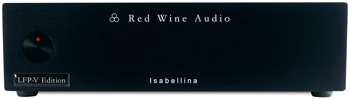
Redwine Audio Isabellina LFP-V ($1,500)

This is a non over-sampling, non up-sampling DAC with dual-triode 6922 tube output stage and off-the-grid battery power.  It has USB, Coaxial and Toslink inputs. Supposed to sound spectacular.  There's also a pre amp and an integrated amp version.


MHDT Laboratory Havana  ($872)

The Taiwanese-made Havana DAC uses PCM63P with a Crystal CS8414 receiver chip which runs in non over sampling mode. Also sporting a tube output stage with GE5670 as default tube.  The main facade is semi-transparent acrylic which is pretty cool. USB input also provided and converted into SPDIF internally (The Redwine coverts USB to i2S). Balance version also available.


This is provided as kit and also fully assembled with Tesla ECC88 tube output stage.  The DAC chip used is classic TDA1541A. The circuit is classic DIY-style and the output stage is based on the Lampizator's modifications.  Thorsten Loesch's design which was based on his original ideas on tubes output stage for digital audio, first published back in 1999 in the Newsletter of the London Live DIY-HiFI Circle.

This is a two box DAC with a separate power supply unit.  The DAC chip used is Philips NOS TDA1543.  Not only one chip, but 16 of them! The designer states that this increase linearity and dynamic range while lowering the noise floor.  While the 1543 is no 1541, I heard good things about it from a trusted source and it is priced well!.  The Taiwanese are just amazing.

Tranquility DAC ($2,395)
This DAC is quite elusive on how it works.  It is an USB only DAC, no other inputs.  No details on circuits or chip used, just that it is NOS and uses discreet components plus some proprietary USB implementation.  There are reports on various forums on the internet that it rival the best vinyl gear in terms of "realness" and is very analog like in its presentation.  I ordered the SE signature version and their specialist "essential SE" USB cable designed to work with the DAC.  So this will be my reference NOS DAC in my desktop system. (if it ends up winning the Bel Canto DAC 2.5)


So please let me know if you suggest a different contender!